
The Ribbon Driveway Revival — Old Idea, Perfect for Modern Florida Homes
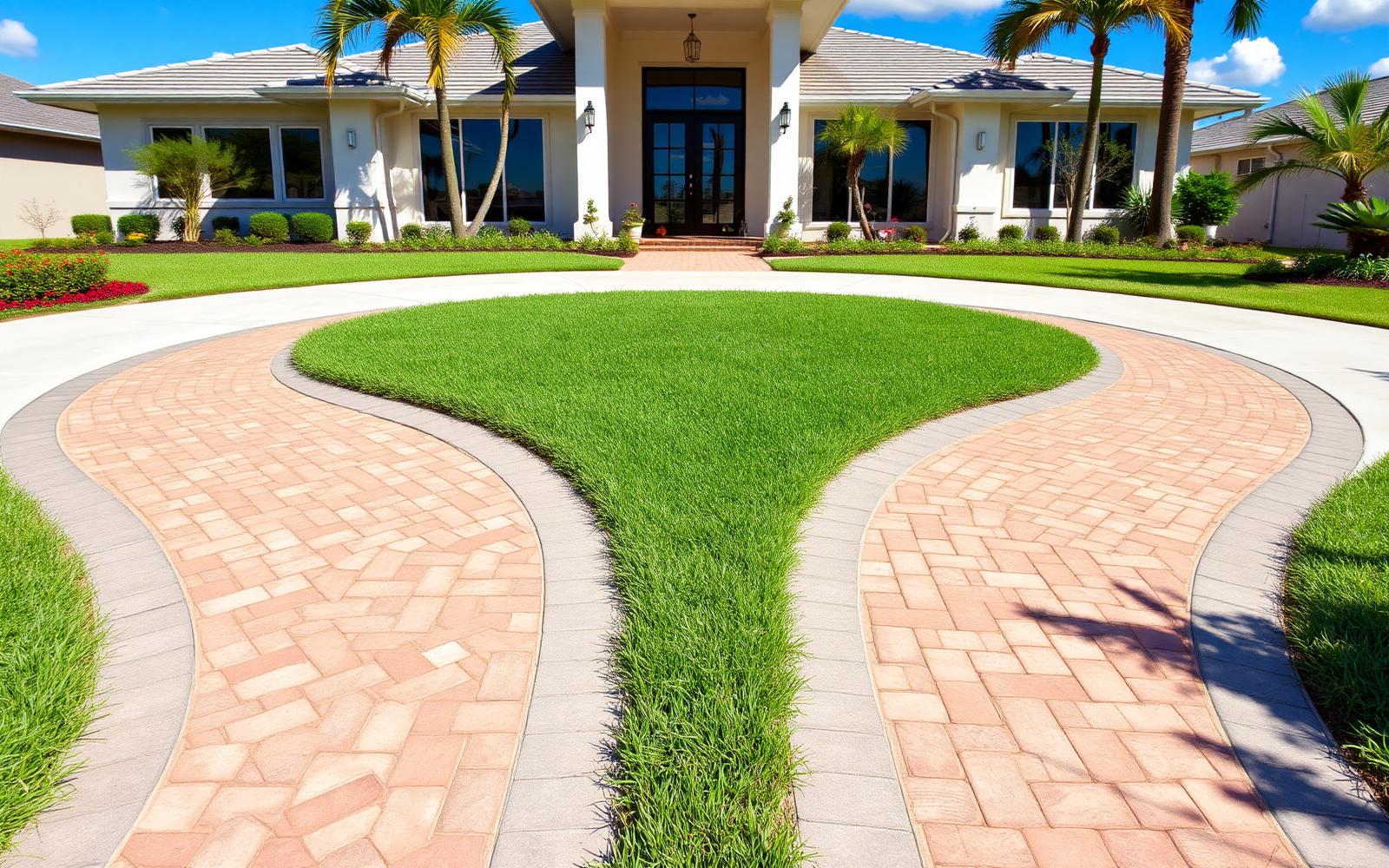
Two strips of paver or concrete with grass between them. Cheaper than a full slab, better for drainage, and a clear comeback in Coral Gables, Pinecrest, and Palmetto Bay.
What a ribbon driveway actually is
Two parallel strips — usually 18–24" wide each — that the car wheels track on, with grass, gravel, or low groundcover filling the 24–36" center and outer edges.
Originated in the 1920s when concrete was expensive and labor was cheap. Coming back now because permeability codes love them and the look is unmistakably Old Florida.
Why they're winning in 2026
Less impervious surface = better stormwater compliance and easier HOA approval in flood-prone zones.
Material savings: roughly 40% less paving area than a full driveway. A 60-ft ribbon driveway in concrete pavers runs $5,500–$9,000 vs. $11,000–$16,000 for a full slab.
Aesthetics: the green center softens the curb appeal and breaks up the visual mass of the driveway.
When NOT to choose ribbons
Multi-car households with frequent guest parking. Visitors won't track perfectly on the strips and will tear up the grass center.
Heavy vehicles (RVs, work trucks) — the concentrated wheel load over a narrow strip needs a reinforced base or a wider strip. See full paver pricing.
Frequently asked questions
With the right shade-tolerant species (zoysia or empire) and proper irrigation, the center strip stays healthy for the life of the driveway.
Most do, but some communities require continuous paving. We pull and submit HOA drawings for every project — confirm before signing.
Get a free quote from Bedrock.
Residential and commercial. Licensed, bonded, insured.