Driveway Resurfacing vs Replacement: When Each One Actually Makes Sense
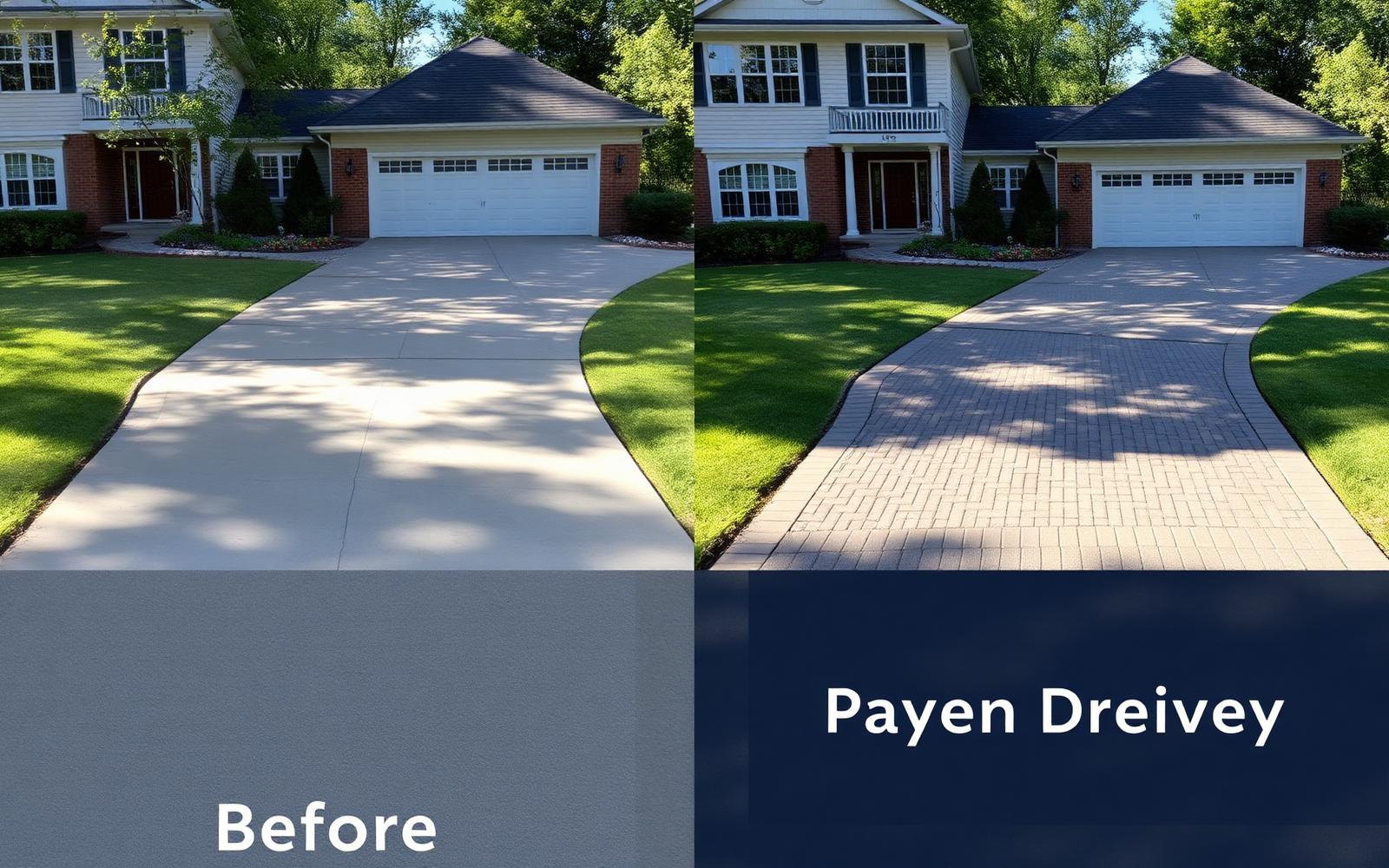
Resurfacing sounds cheap and easy and sometimes it is the right call. Here is the framework we use to decide whether to refinish the existing driveway or start over.
The honest question to ask first
When a driveway looks tired the temptation is to slap something new on top. Sometimes that is fine. Sometimes it is throwing money at a problem that will reappear in eighteen months. The decision depends almost entirely on what is happening below the surface.
If the base is sound and the surface is just worn, resurfacing is a real option. If the base has failed, no overlay will save it. We assess the base before quoting either path.
When resurfacing actually works
Concrete overlays work on slabs that are structurally sound, free of major settlement, and properly drained. A bonded overlay can add thickness, hide hairline cracks, and accept a stamped or stained finish that looks like a new install. Cost runs five to nine dollars per square foot installed.
Paver overlays on top of existing concrete can work when the base slab is sound and elevations allow the added height. We bond a thin pedestal layer or a sand setting bed and lay full thickness pavers on top. This is most common around pools where pulling out the existing slab would damage the pool structure.
When resurfacing is throwing money away
Active settlement, structural cracks wider than a quarter inch, slab tilting toward the house, and missing or failed base prep all rule out resurfacing. An overlay over a moving slab telegraphs every flaw within months and you end up paying twice.
We have seen homeowners try three rounds of overlays in five years before accepting that the base needs to come out. Each round cost roughly half of a full replacement. By the third round they spent more on overlays than a full new install would have cost.
If your driveway shows the symptoms covered in concrete driveway cracks, get a clear diagnosis before paying for any cosmetic fix.
Resurfacing options worth considering
Polymer modified concrete overlays bond well to existing slabs and accept color and texture. Stamped overlays imitate paver patterns convincingly. Spray applied knockdown finishes add slip resistance and a fresh look at the lower end of the cost range.
Epoxy and polyurea coatings are common in garages and have moved outside in recent years. They look great early and tend to chip and yellow under direct Florida sun within three to five years. We do not recommend them on driveways.
When replacement is the better long term move
Full replacement makes sense when the base has failed, when the project changes the layout, or when switching materials. Going from a tired concrete slab to a paver field nearly always justifies removal because the substructure is built to a different spec.
Switching to pavers is the most common replacement we do. The paver field handles ground movement better, lasts longer, and adds resale value. The full comparison is in pavers versus concrete in Florida.
Cost comparison in 2026
Concrete overlay on a sound existing slab: five to nine dollars per square foot installed. Paver overlay on a sound existing slab: ten to fifteen dollars per square foot installed. Full concrete replacement: nine to fifteen dollars per square foot installed. Full paver replacement: fourteen to twenty eight dollars per square foot installed depending on material.
On a typical seven hundred square foot driveway, that puts an overlay at roughly thirty five hundred to sixty three hundred and a full replacement at sixty three hundred to nineteen thousand six hundred. The wide spread on full replacement reflects material choice. Full pricing logic is in the South Florida paver driveway cost guide.
How we make the call on a real driveway
Step one is a visual walk and a few core samples to confirm base condition. Step two is a moisture and movement check on any existing slab. Step three is a layout review, because if the homeowner wants the driveway widened or curved, replacement usually wins by default.
We give clients an honest written recommendation and we are clear about the tradeoffs. Sometimes the right answer is the cheaper one and sometimes it is not. Either way, the decision belongs in writing before a single piece of equipment shows up.
Frequently asked questions
A bonded concrete overlay adds about thirty to fifty pounds per square foot. A paver overlay adds about sixty to eighty pounds per square foot. A sound slab over a properly compacted base handles either easily.
Generally no. Asphalt is too soft to support a paver field reliably. We almost always remove asphalt before installing pavers.
Overlays usually finish in three to five days. Full replacements run five to ten days depending on material and weather.
Get a free quote from Bedrock.
Residential and commercial. Licensed, bonded, insured.