
Driveway Base Prep in Florida: The Layer That Decides Everything
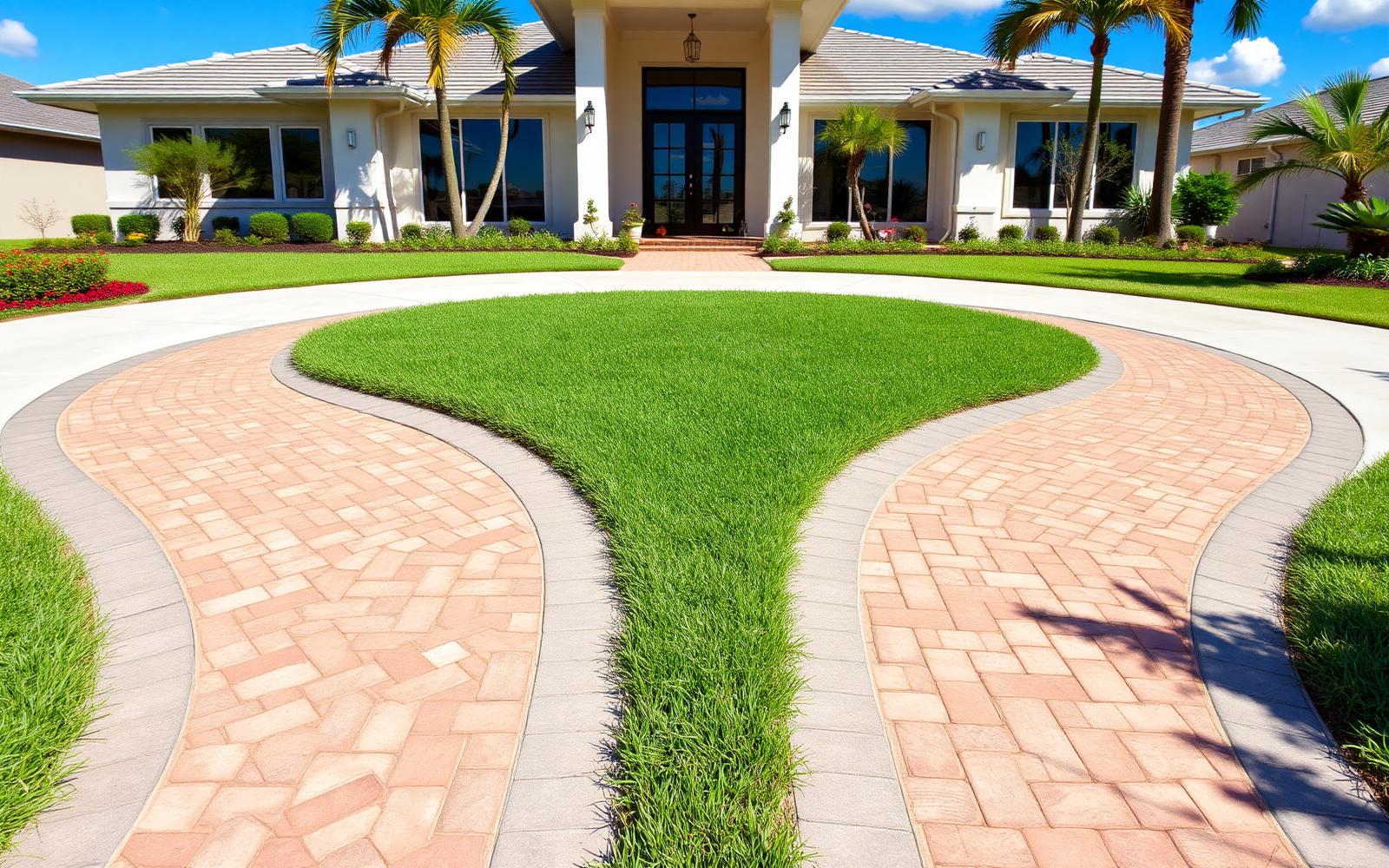
The base under your driveway is the single biggest factor in how long it lasts. Here is the spec we put under every Bedrock job and why we will not cut it.
Why base prep is the whole game
Pavers are remarkably durable on a sound base and remarkably fragile on a bad one. Concrete is the same. The visible part of a driveway, the stone or the slab, gets all the attention and almost none of the failure. The failure happens four to ten inches below the surface, where the base either holds the load and drains the water or does neither.
South Florida soil is mostly sand over limerock with a few feet of organic fill on top in older neighborhoods. The water table is high. The rain is heavy. Get the base wrong on a Florida driveway and you will be repairing it on a calendar.
Our standard residential base spec
We start with full removal of organic material and existing surface down to firm subgrade, usually six to ten inches below finished grade. We compact the subgrade with a vibratory plate to confirm there is no soft spot.
Then we install six inches of crushed limestone aggregate, placed in two three inch lifts, each compacted to ninety eight percent of standard proctor density. We finish with one inch of clean coarse bedding sand, struck level with a screed.
Edge restraint goes in before the pavers, polymeric joint sand goes in after, and the field gets a final pass with a plate compactor through a urethane mat. Total base depth from finished grade is about seven inches plus paver thickness.
When the base needs to be deeper
Heavy commercial traffic, large delivery trucks, and circular driveways with constant turning loads all increase base requirements. We go to eight or nine inches of compacted limestone on those projects, and we may add a geotextile fabric between the subgrade and the base to prevent migration.
Driveways over historic fill or near older trees with significant root mass also need extra base depth, sometimes paired with root pruning and a root barrier. We assess each property in person before quoting.
The role of compaction
Putting limestone down is not base prep. Compacting it is. Each three inch lift gets multiple passes with a plate compactor or a small ride on roller depending on area. We test density with either a nuclear gauge on commercial projects or a dynamic cone penetrometer on residential.
An undercompacted base looks identical to a properly compacted base on the day of install. The difference shows up in year two when the field begins to settle in low spots. The repair guide for those situations is in fixing a sunken paver driveway.
Drainage built into the base
Base prep and drainage are not two separate steps. They are the same step. We slope the subgrade to direct water away from the house, away from the garage, and toward an intended outflow. We grade the limestone base to mirror the slope of the finished surface so water never sits on top of the base layer.
On lots with poor natural drainage we add a French drain or a permeable paver section to manage stormwater on site. The full drainage logic is covered in the Florida driveway drainage guide.
What goes wrong on cheap installs
The most common base failures we see are: too little limestone, undercompacted limestone, organic material left in the subgrade, missing geotextile under known soft soils, and base sloped toward the house instead of away from it.
Each of these failures is invisible on the day of completion. Each of them shows up as a real problem within one to three years. By then the original installer is rarely around to honor a warranty, and the repair is full removal of the failed area and reconstruction.
Cost implications and what to ask
Proper base prep adds roughly two to four dollars per square foot to a paver project compared to a thin cheap base. On a seven hundred square foot driveway that is fourteen hundred to twenty eight hundred dollars. Spread over a thirty year service life it is the cheapest investment in the entire project.
Ask any contractor exactly what base depth they are putting down, how many lifts they will compact, and what density they will achieve. Get the answer in writing. The pricing context for the full project is in the South Florida paver driveway cost guide.
Concrete driveways need the same logic
Concrete homeowners often assume a slab is so heavy it forgives a poor base. It does not. The same compacted limestone is needed under a concrete driveway, the same drainage rules apply, and the same control joint planning matters. Most cracked driveways trace to base failures, not concrete failures. The breakdown is in the article on concrete driveway cracks.
Frequently asked questions
On a typical residential driveway, base prep takes two to three working days from excavation to compacted screed. The full paver install adds another two to four days.
Sometimes, if the existing base is sound and properly compacted. We test before deciding. Reusing a failed base guarantees a failed new driveway.
Not always. We use it under known soft soils, over high organic content, and on commercial projects with heavy truck traffic. On most clean residential subgrades it is optional.
Get a free quote from Bedrock.
Residential and commercial. Licensed, bonded, insured.